
Watch Keeping on a Sailing Yacht: How Watch Systems Work

by Heather Deary · Sun 25 Oct 2026
What is watch keeping on a sailing yacht?
On a long passage, someone must always be on deck looking after the boat. The crew is split into watches that take turns, usually in a 2-watch or 3-watch system, so everyone gets rest while the yacht is kept safe and on course day and night.
The first time I was part of a watch system onboard I was terrified. What if I fall asleep on watch? what if I can’t sleep when I am off watch? What am I supposed to be doing while I am watching? What am I watching? It was a minefield of watching questions.
There are many different watch patterns that skippers use depending on crew numbers, crew experience, expected weather conditions and other vessels in the area. The two main patterns are a 2 watch or 3 watch system.
2-watch vs 3-watch systems
A 2 Watch system will often consist of a pattern of 6 hours on watch during the day and then 4 hours at night meaning each crew member will have a maximum of 6 hours sleep at a time and either 1 or two night watches per night. Crew are split into 2 groups and are either on or off. There is then a rotating person each day allocated as support to cook the meals and clean etc during the day and then that person gets a full nights sleep before rejoining the watch pattern.
A 3 watch system is slightly more complicated with 4 hour watches during the day and 3 hours at night but with 3 watches the standby role is split evenly amongst the crew each day doing shorter standby shifts and then benefitting from a back to back off watch each day to get some extra sleep.
From my experience and I have sailed on both patterns the 3 watch system ensures the crew are better rested and able to perform their on watch duties with more energy.
On our St Helena expedition, you’ll be part of a watch system for days at a time, with a skipper and crew alongside you. Check out the trip → HERE
How do you sleep on a yacht?
I never found it difficult to sleep while sailing, at home I need perfect conditions, comfy bed, nice dark curtains and peace and quiet, Egyptian cotton sheets and a feather duvet help too. However, on a yacht after my watch I can lie down in a crinkly sleeping bag, still wearing my clothes, in full sun in the middle of the day, with the sounds of the on-watch crew chatting on deck, and I sleep like a baby.
It is incredible how after a day or two on the water, with no screens or distractions how your body gets into the rhythm of the ocean. The focus of each day is to move forward through the water safely towards your destination and that can be exhausting. Fresh air and hard work, concentration on navigation or helming, trimming the sails and keeping the crew fed and watered is a 24/7 operation when on an ocean passage. Always with a watch on duty keeping the boat and her crew safe and on course. Check out my Blog on sailing at night HERE
What do you do on watch?
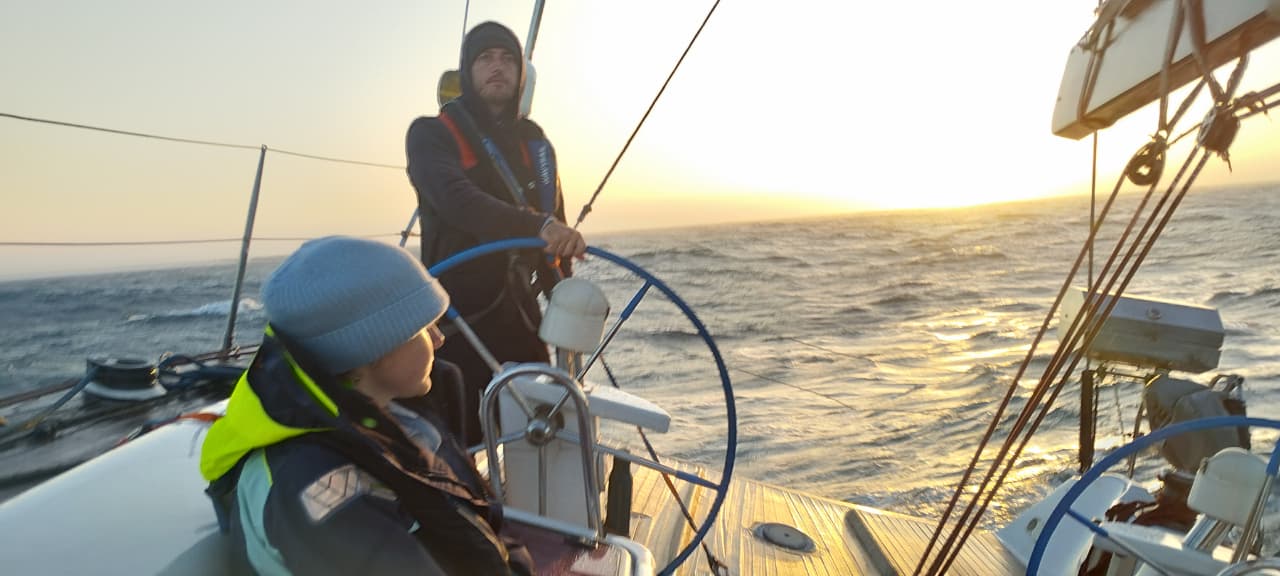
Watch-keeping is a serious responsibility as while your crew mates sleep it’s up to you and your watch to take responsibility. It is inexcusable to sleep or be distracted on watch, it’s most definitely not a time for playing on your phone or having 40 winks. The watch is responsible for helming or monitoring the auto helm, keeping the sails trimmed according to the conditions, following the course set, monitoring the weather, looking out for other vessels and ensuring that there is plenty of passing space.
Keeping the deck tidy and lines coiled and ready for action in case of a sudden squall or wind shift, there is nothing worse than a tangle of lines if you need to drop a sail in a hurry. The on-watch crew are also there to look out for each other, watching your crew mates, checking they are safe while they work at the mast or on the foredeck, it’s the ultimate team, moving together as one to keep the boat safe and fast.
Watching at night and the rules of the road
There are defined rules of the road when at sea and it is essential that the watch leader is fully up to date with the Col Regs (International Regulations for Preventing Collisions at Sea) looking out for other traffic, determining what vessel they are and who is the ‘give way’ vessel and who is ‘stand on’. It gets even more interesting at night when there are only the vessels lights and onboard instruments ( AIS, Radar etc) to help you spot other vessels and hazards. Even though all the crew might not know all the definitions of the lights and sounds ALL the watch are responsible for watching out and pointing out what they see.
When on WATCH what are we watching for?
-Each other to make sure we are safe.
-Outside the boat, watching for danger, hazards and other vessels.
-The weather, watching for strange cloud changes, squalls and thunderstorms etc
-The sails, watching the trim of the sails and adjusting as required.
-The boat, looking for potential problems like chafing lines or lines in the water.
-And lastly the sea and the sky to enjoy the space, the freedom and splendour of the open ocean, taking time to spot the wildlife we encounter on the way.
Curious what a watch is really like? See our 2027 adventures → HERE
FAQs about Watch keeping
What is a watch system on a yacht? A rota that divides the crew into groups so someone is always on deck while the others rest.
How do 2-watch and 3-watch systems differ? A 2-watch system splits the crew into two groups, with longer watches. A 3-watch system has shorter watches and gives each person longer rest between them.
What do you do on watch? Steer or monitor the autopilot, trim the sails, follow the course, watch for other vessels and weather, and look out for your crew mates.
Can I sleep on a yacht at sea? Most people sleep well after a day or two. Fresh air, hard work and no screens help.
Do I need experience to stand watch on a Wavysail trip? No. On a Wavysail trip, you stand watch with experienced crew and will have a full briefing from the Skipper on what to do and what to look out for.