
Sailing the Baltic with Nigel Parry: What to Expect on Our 2027 Expedition
Wavysail's Baltic Expedition sails from Kiel to Copenhagen, Gdańsk and back to Kiel between 29 May and 3 July 2027, in three 10-day legs with changeovers at Copenhagen and Gdańsk. Your skipper is Nigel Parry, who has sailed since the age of five, has spent over twenty years sailing professionally and has logged many thousands of miles in the Baltic. There are no tides to plan around, the Danish islands offer sheltered, short passages between harbours, and no experience is needed to join. We caught up with Nigel and asked him what makes the Baltic special, what a day on board will be like, what to pack and why he's so excited to skipper this expedition.


Key facts
- Route: Kiel, Copenhagen, Gdańsk, Kiel
- Dates: 29 May to 3 July 2027, in three 10-day legs: Leg 1 Kiel to Copenhagen (29 May to 8 June), Leg 2 Copenhagen to Gdańsk (10 to 20 June), Leg 3 Gdańsk to Kiel (23 June to 3 July)
- Skipper: Nigel Parry, over twenty years sailing professionally
- Group size: maximum six guests
- Experience: none needed, hands-on from day one
- Tides: none in the Baltic
Explore the full route, leg dates and availability on the Baltic Expedition page.
Who is Nigel Parry, the skipper of our Baltic Expedition?
Nigel has been on the water for almost as long as he can remember, and the Baltic has been his sailing ground for years, making him the perfect skipper for the expedition.
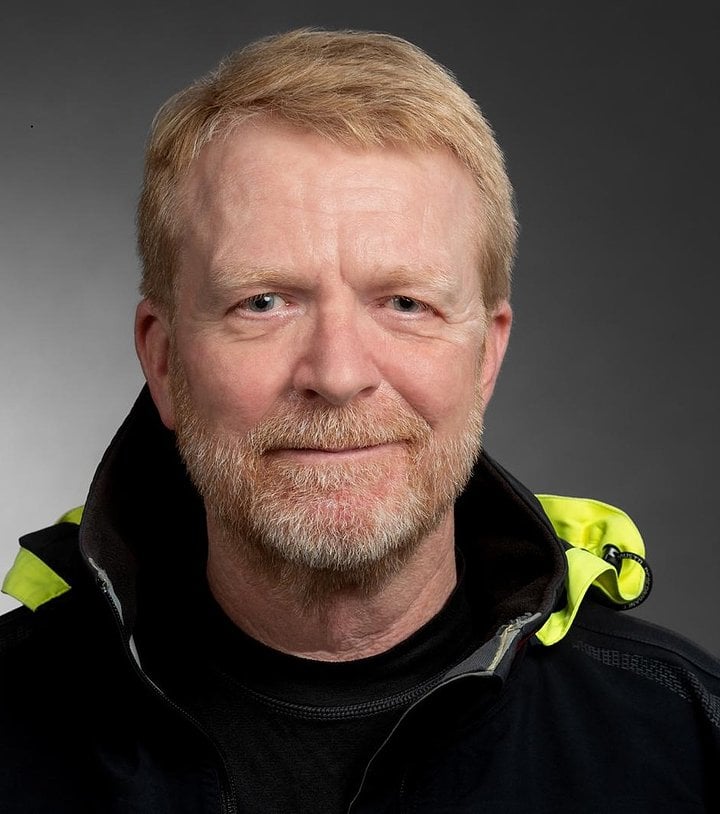
"I've been sailing since the age of five and have spent over twenty years sailing professionally, including many thousands of miles exploring the Baltic Sea. I'm a safety-conscious but encouraging skipper, and I love getting people involved in all aspects of sailing. My role is to provide the experience, knowledge and guidance to make the trip safe and enjoyable, while allowing everyone to become part of the adventure."
Why sail the Baltic Sea?
Ask Nigel why he keeps going back and he does not name a single thing. It is the mix.
"For me, it's the combination of beautiful scenery, welcoming people and the sheer variety of experiences. Particularly around the Danish islands, there is always another lovely harbour or anchorage just around the corner, making it easy to explore at a relaxed pace."
The Baltic also shakes off a few myths. Many guests arrive expecting grey skies and cold water, and Nigel enjoys proving them wrong.
"Many people arrive expecting the Baltic to be cold and perhaps a little austere, only to discover that the weather can be wonderfully pleasant (no, it's definitely not always freezing!)."
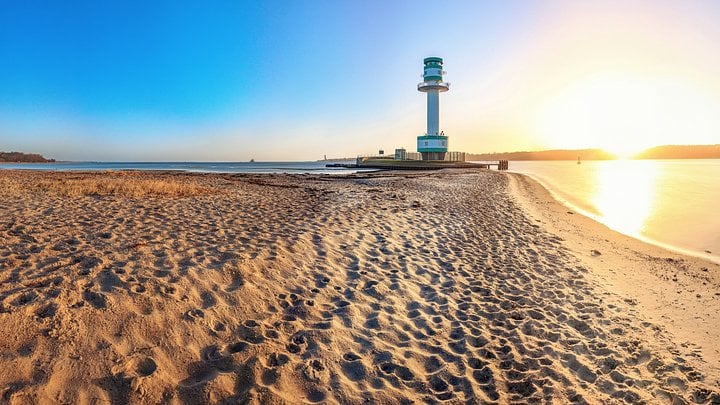
Then there is the practical bonus every sailor from the UK notices straight away. The Baltic has no tides to plan around, which means a more relaxed rhythm on board.
What is the route of the Baltic Expedition?
The loop runs from Kiel to Copenhagen, on to Gdańsk and back to Kiel. Along the way you pass between very different coastlines, and Nigel explains how this variability makes the Baltic so special.
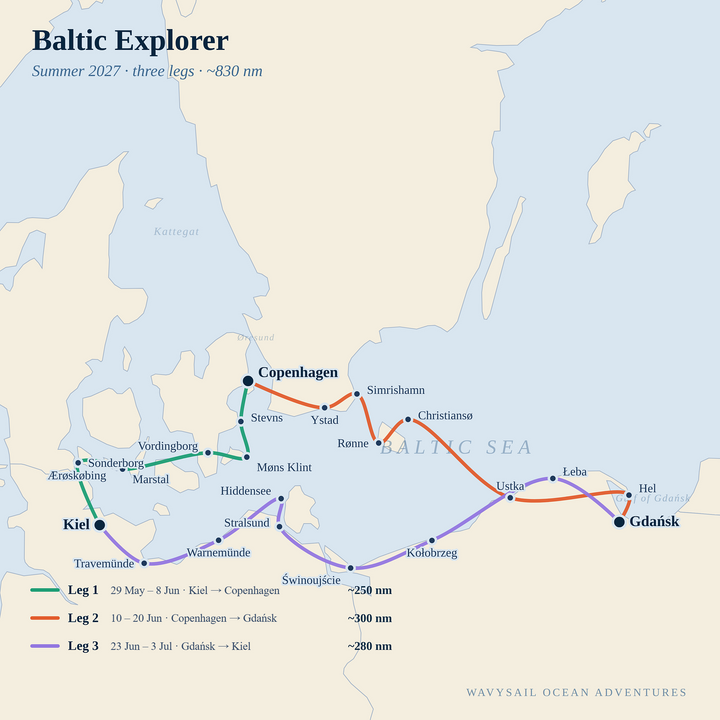
"The western and central Baltic tend to be relatively low-lying, which often provides fairly consistent sailing winds, while the proximity of land helps to keep sea conditions manageable. The scenery changes considerably as you travel through the region. From the gentle, rolling hills around Sønderborg to the spectacular white chalk cliffs of Møn and Rügen, and the more rugged coastline of Bornholm, each area has its own distinctive character."
Every leg has its own flavour, shaped by the old Hanseatic trading routes that still define the region, from the great historic trading cities to small island communities that have kept their own identities. As always, the exact stops are shaped by the weather and the wishes of the crew.
Sønderborg, Nigel's favourite harbour in the Baltic
Pressed to pick a favourite, Nigel names Sønderborg on the island of Als, a pretty town with a remarkable past. It is linked to the 1864 Battle of Dybbøl, when Prussian forces attacked the Danish defences, an event that has since inspired Danish literature and film, and it was home to the Danish naval college for many years.
"But there's also a very personal reason for my affection for the place: it's where I got married, nearly ten years ago! So, for me, Sønderborg is much more than just another beautiful harbour on the Baltic sailing map."
Copenhagen and Gdańsk, seen from the sea
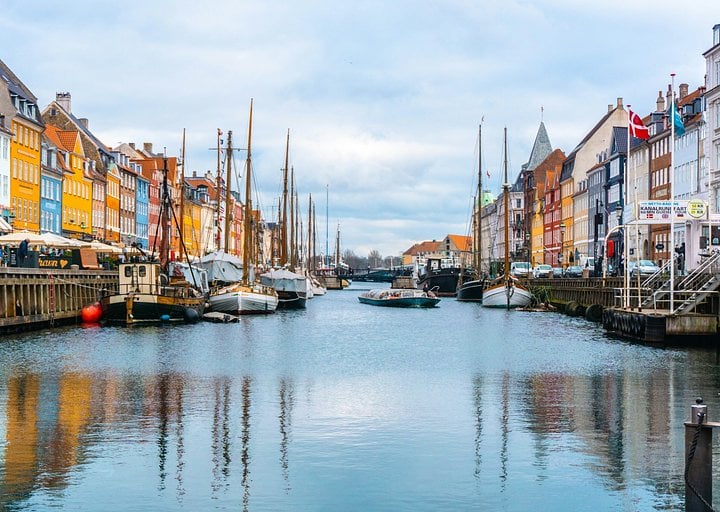
Two of the great Hanseatic cities sit at the heart of the voyage. Copenhagen is a royal capital with magnificent architecture and a famously relaxed Scandinavian feel. Gdańsk is different again, a wealthy trading city whose historic centre has also been shaped by the events of the twentieth century. Guests can visit the Gdańsk shipyard where the Solidarity movement began in the 1980s, and on the approach by sea the yacht passes Westerplatte, where the first shots of the Second World War were fired in September 1939.
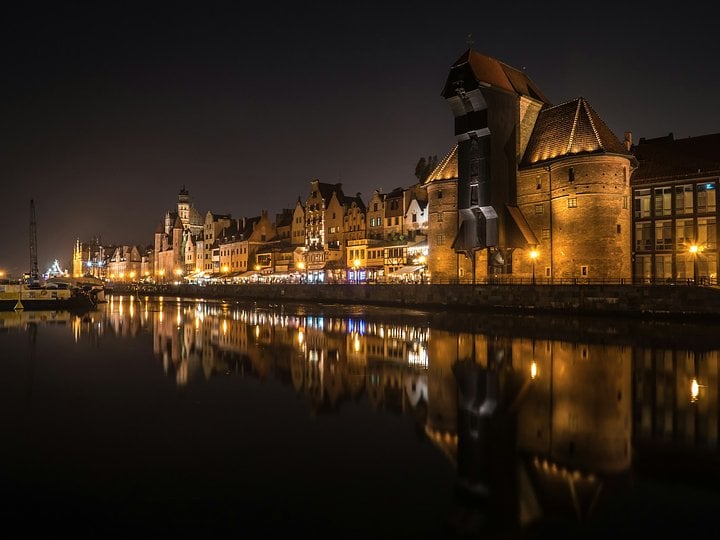
"For me, one of the real pleasures of this trip is experiencing these two fascinating cities from the sea, and seeing how their shared maritime history has shaped them in such different ways."
What is the sailing like: sheltered islands or open water?
Both. The western Baltic around the Danish islands is sheltered, with relatively short passages between harbours, while further east the sailing opens up.
"Don't mistake sheltered, however, for boring! The intricate coastlines, narrow channels and numerous islands provide some fascinating pilotage and plenty of navigational challenges."
Further east, towards Bornholm and the German and Polish coasts, passages are longer and more open, and can be more demanding depending on the conditions. That gives the voyage a natural build, from relaxed coastal sailing to passages that stretch your navigation and seamanship. Nigel's approach is simple: everyone gets involved, whatever their level of experience.
What does a typical day on board look like?
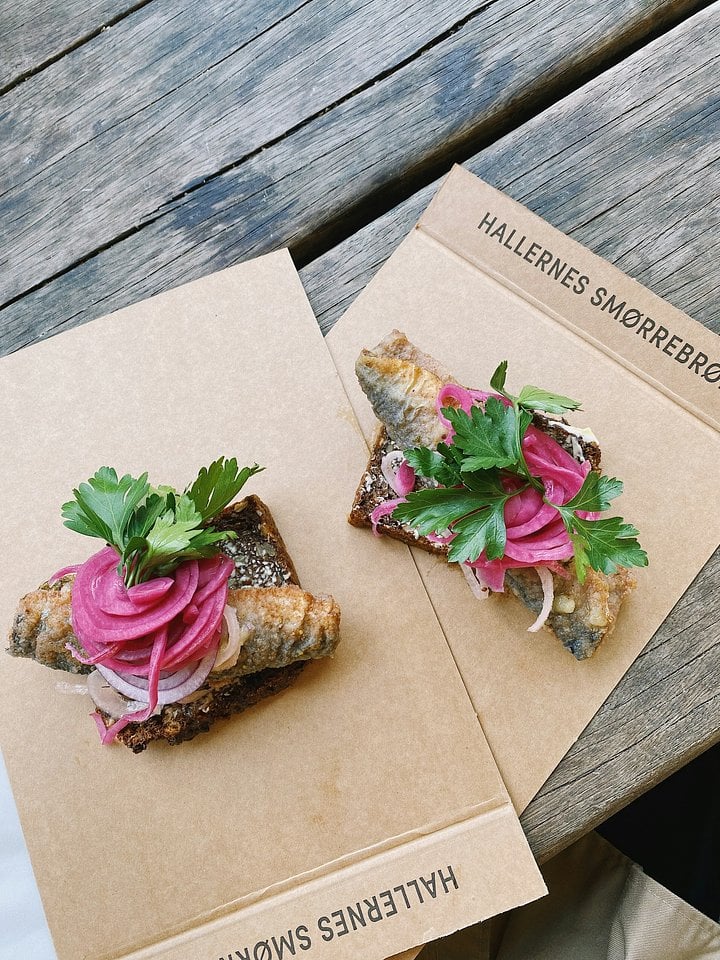
Days start slowly and finish with time ashore. Nigel describes a rhythm of fresh bread from the local bakery, a skipper's briefing and an afternoon arrival.
"A typical day might start with a trip to the local bakery to collect fresh bread and pastries, followed by a relaxed breakfast and some preparation of the boat for the day ahead. We'll have a group chat and skipper's briefing to discuss the proposed itinerary, the weather and the sailing conditions."
Around the Danish islands the pilotage is fascinating and occasionally challenging, while further east the passages stretch out. Whatever the day holds, the aim stays the same.
"The aim is to enjoy the journey as much as the destination, arriving in the afternoon with time to discover another beautiful harbour, explore ashore and perhaps enjoy a drink or dinner overlooking the water."
What is the weather like in the Baltic from late May to early July?
Long days, good breezes and fewer crowds than high summer. Nigel describes it as a lovely time to sail.
"Daytime temperatures regularly exceed 20°C, and it's not unusual to see temperatures approaching 30°C. The days are wonderfully long, particularly as we get towards the summer solstice, giving us plenty of daylight to enjoy both the sailing and time ashore."
It is not guaranteed sunshine, and he is upfront about that. Expect a mix of sunshine, good sailing breezes and the occasional passing weather system, with cool evenings, particularly in May. Swimming is tempting on warm days, though there is one local quirk worth knowing.
"One small local peculiarity worth mentioning is the occasional abundance of moon jellyfish, particularly later in June. They're harmless and don't sting, although perhaps not everyone's idea of the perfect swimming companion!"
Can complete beginners join a Baltic sailing trip?
Yes. Nigel regularly takes complete beginners to sea as a sailing instructor, and says most people settle in surprisingly quickly.
"Don't worry! As a long-standing sailing instructor, I regularly take complete beginners to sea, and it's very much part of the job. We create an encouraging, supportive and safe environment where questions are always welcome and shouting simply doesn't exist!
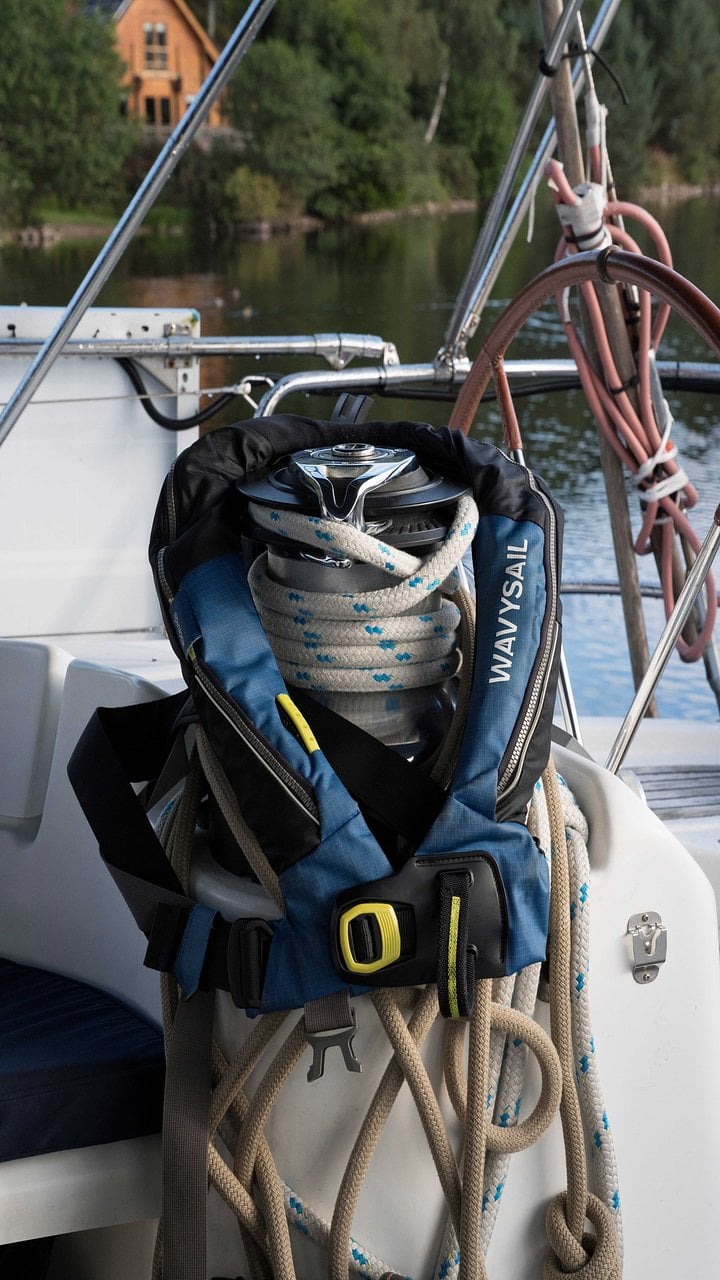
You will be doing real sailing, not watching. Depending on how much you want to take on, that might mean taking the helm, helping with sails, handling ropes, assisting with navigation or getting involved in mooring and anchoring. Nigel explains what is happening and lets you have a go, with experienced professional crew close by.
"This isn't a formal sailing course, and there's no pressure to master anything or pass any tests. The emphasis is on enjoying the overall experience, learning a few new skills along the way and becoming part of the crew."
If you would like to read ahead on the skills you will meet on board, start with our guides to passage planning, watch keeping and essential sailing knots.
What should you pack for a Baltic sailing holiday? Nigel's top three tips
1. Pack sensibly and think layers. Conditions vary, so you might be in shorts and a T-shirt by day and need something much warmer later. Nigel recommends a warm mid-layer such as a fleece plus a good windproof and waterproof outer layer, a soft holdall or sailing bag rather than a hard suitcase, proper deck shoes with soles designed for wet decks, and sun cream, sunglasses and a hat, because "the Baltic sunshine can be surprisingly strong".
2. Be prepared for the possibility of seasickness. Most people manage perfectly well, but if you know you are prone to it, bring the remedy that works for you. Some medications cause drowsiness, so if you are not sure, speak to your doctor or pharmacist beforehand.
3. Bring an open mind and a sense of adventure. In Nigel's words: "Just bring your enthusiasm and a willingness to try something new!"
Why sail the Baltic with Wavysail?
For us, all our trips are built around small groups, hands-on sailing and hugely experienced skippers who can adapt as needed. Nigel puts it like this.
"One of the great advantages of sailing with Wavysail is the small-group atmosphere. It gives everyone the opportunity to get to know one another properly, creating a more intimate and personal experience. We have an itinerary and destinations in mind, but there's one golden rule in sailing: the weather is king!"
And if he had to sum up the voyage in one line?
"For me, Wavysail is about combining excellent sailing with the opportunity to explore new horizons, meet interesting people and have a genuinely enjoyable adventure along the way."
Frequently asked questions about the Baltic Expedition
Do I need sailing experience to join the Baltic Expedition?
No. Nigel regularly takes complete beginners to sea, nothing is expected of you before you arrive, and you join as crew with experienced professional crew on hand throughout. If you already sail, you can build skills and miles on the longer open-water passages.
How many guests are on board?
A maximum of six guests, which keeps the atmosphere personal and gives everyone the chance to get involved.
Are there tides in the Baltic?
No. The Baltic has no tides to contend with, so there are no early starts to catch a tidal gate and the days can run at a relaxed pace.
Can I join just one leg?
Yes. The expedition runs in three 10-day legs with changeovers at Copenhagen and Gdańsk, so you can join one leg, two legs or sail the whole loop. Leg 1 (Kiel to Copenhagen) runs 29 May to 8 June, Leg 2 (Copenhagen to Gdańsk) runs 10 to 20 June and Leg 3 (Gdańsk to Kiel) runs 23 June to 3 July. See the Baltic Expedition page for dates, prices and availability on each leg.
What is the weather like in late May to early July?
Expect long days, regular daytime temperatures above 20°C and the occasional warm spell approaching 30°C, with cooler evenings, particularly in May. Pack layers and waterproofs.
Can you swim in the Baltic on this trip?
On warm days, yes, though swimming is not as central as in the Mediterranean. Moon jellyfish can be common later in June. They are harmless and do not sting.
What if the weather changes the plan?
We plan passages around the forecast and adapt the itinerary when we need to. The weather is king, and our priority is a safe and enjoyable voyage.
Join Nigel on the Baltic Expedition 2027
29 May to 3 July 2027, Kiel to Copenhagen to Gdańsk and back, with a small crew, a skipper who knows these waters and no tides to plan around. Berths are limited, so if you would like to join Nigel, view the Baltic Expedition and book your place.